





English: Reading & Phonics
Curriculum
At Sir William Burrough we teach phonics and reading based on the Read Write Inc (RWI) programme. RWI is a phonic based approach to teaching reading. It involves children learning to recognise sounds and blending them together to read words. Children are also introduced to ‘tricky’ or ‘red’ words which contain spelling patterns that cannot be sounded out. Some of the most frequently used words in the English language have an uncommon spelling pattern and must be learnt by sight. Read Write Inc. introduces the simple Speed Sounds (one sound, one grapheme or special friends: two letters, one sound) with Speed Sounds Set 1 and Set 2. The children then learn more ways of reading the same sounds with the complex Speed Sounds Set 3. Children are taught letter names before moving on to Speed Sounds Set 3. Once children know the first set of Speed Sounds they are ready to read the first Storybooks. Speed Sounds:
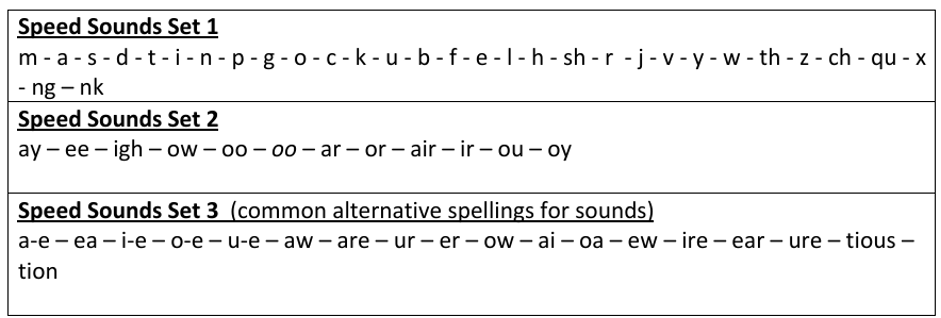
The children are also taught how to use their phoneme (sound) grapheme (letter) knowledge when writing. Their weekly spellings focus also reinforces this. For further information about the Read Write Inc. programme please see the website http://www.ruthmiskin.com/en/parents/
In addition to daily discrete Phonics lessons, Early Reading is promoted across our EY and KS1 curriculum. Our children enjoy a range of high-quality and language-rich texts, which they talk about, act out and explore in Literacy/English lessons, as well as in the wider provision, and across the curriculum.
Post-Phonics: Whole-Class Reading (word reading and language comprehension)
Once our children have completed the Phonics programme, demonstrating a secure understanding of the 5 skills, learners move on to our whole class reading approach:
- the approach has been developed by experts in education, including English experts in our local borough of Tower Hamlets, who hold a wealth of knowledge about our community and the children we teach.
- it is based on the latest research in how children learn to read be
st, ensuring the priority of both word reading (fluency) as well as language comprehension - children are taught reading through this approach daily (each lesson is 30minutes in duration)

- within these lessons, children are given the opportunities to develop their skills through reading a wide range of carefully selected texts including fiction, non-fiction and poetry
- to support our children to gain a deep understanding of the texts being read, and promote the development of our learners’ schema, some texts are studied/read in both reading and writing lessons
- research shows that children with a poor vocabulary at five are four times more likely to struggle with reading in adult life (Oxford Language Report, 2018). Therefore, in each reading lesson (as well as in all lessons across the curriculum), children are explicitly taught vocabulary to support them in accessing the text as they read.
- to support our pupils to know more and remember more over time, all reading lessons also begin with retrieval practice, allowing our pupils the opportunity to activate their prior knowledge and revisit prior learning.
Reading at Home
At Sir William Burrough, we are committed to fostering a lifelong love of reading in every pupil.
Children accessing phonics will take home the book they are looking at this week. This is to build fluency with the shared book from school. Children will also receive weekly QR codes to support the sounds they have been focusing on. This may include additional blending/ transcription games depending on your child’s reading level.
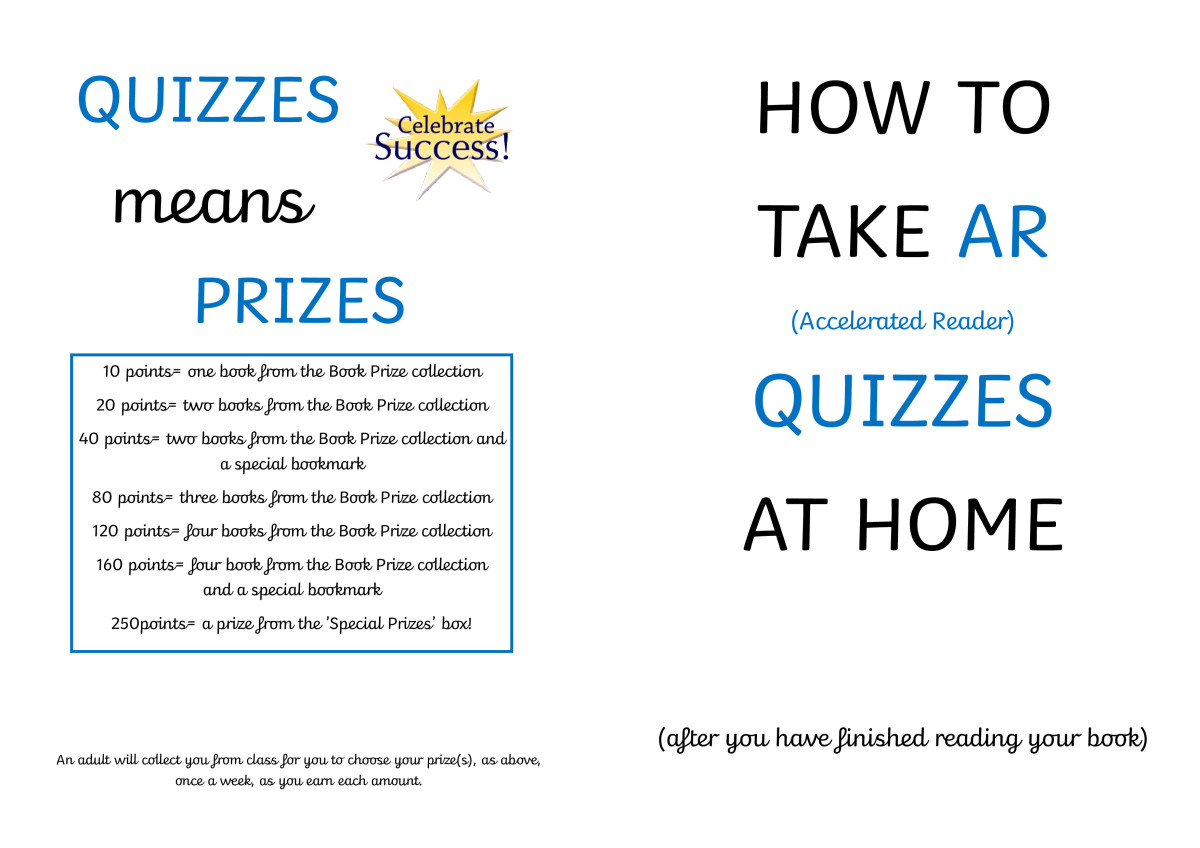
Children beyond the phonic programme use the Accelerated Reader (AR) program by Renaissance to support our pupils continued reading at home.
Our children are supported to choose books that are closely matched to their reading abilities (a child will have a ZPD range e.g. 3.4-5.7); a wide selection of books is kept in in-class libraries for the children to choose from. Having read a book in their reading range at home, the children are then able to do an AR quiz on that book (at home/during one timetabled slot in school). Each successful quiz gives the children points, these points then translate into book prizes to reward the children for their efforts.
All children also take home a free choice book from classroom bookshelves and an additional read for pleasure book from the library, which can be changed during their weekly library slot.
Please see our booklet here, detailing how to access AR quizzes at home:
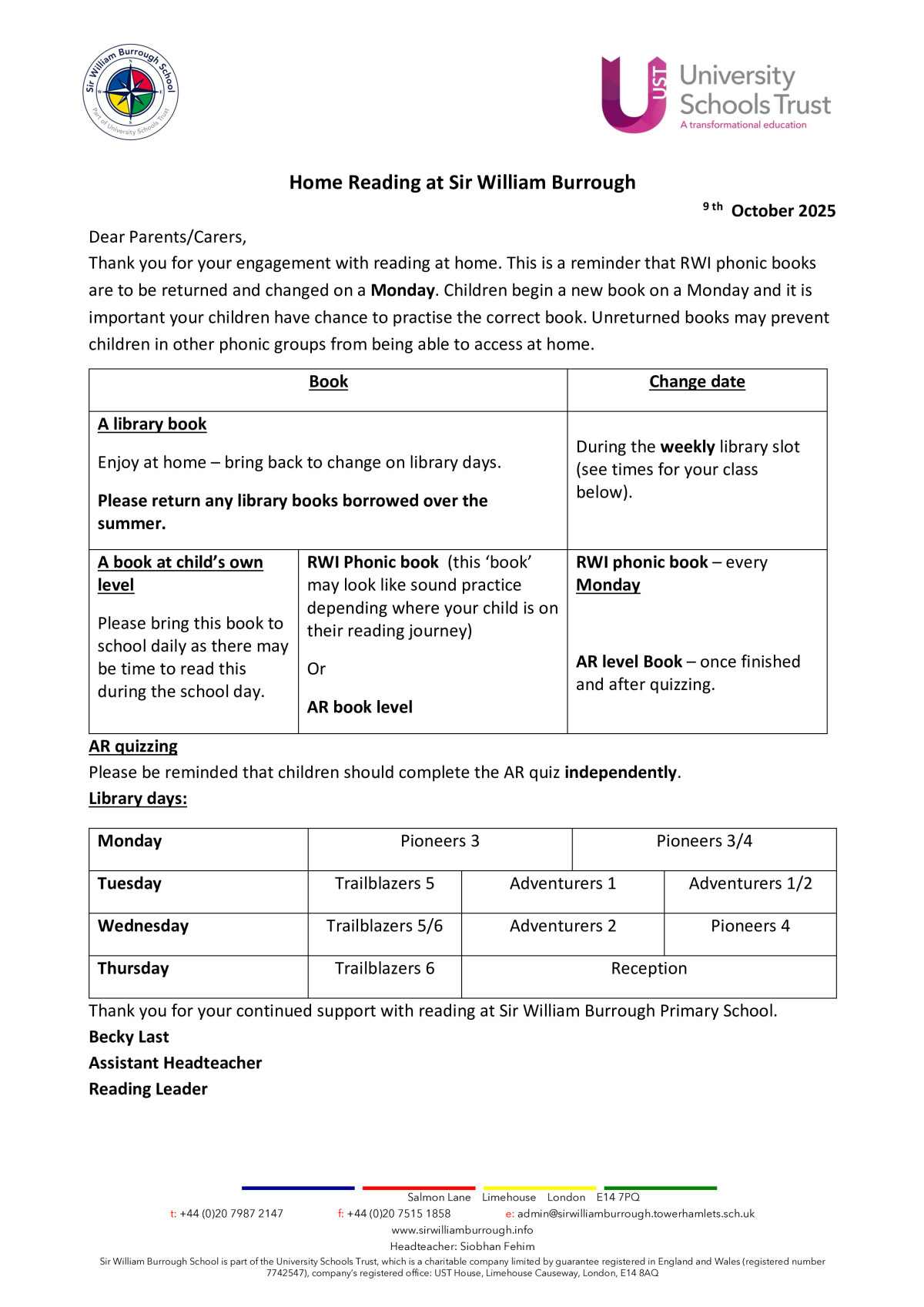
The Oxford Language Report on ‘Why Closing the Word Gap Matters (2018), details that ‘children who had never or barely been read to, heard 4,662 words by the age of five. In contrast, children who had five books a day read to them heard an impressive 1,483,300 words’ Therefore, parents/carers, although your child may demonstrate increasing independence in reading at this point, please do take the time to hear your child read as much as possible as well as reading sections of the book to your child also.
5 Tips for Reading with your Child at Home
- A set routine: consider how/when you can set aside a specific quiet time each day for reading e.g. before bed: ‘little but often’ is best
- Encourage your child to apply their reading skills: avoid telling your child a word if they become stuck in the first instance; instead you might ask- what sounds can you see? how can you split this long word up into chunks?
- Discuss the story: pause to ask questions such as ‘what do you think will happen next?’ ‘How would you describe the main character?’ to develop comprehension skills
- Make connections: relate the story to real-life experiences or other books to deepen understanding and interest
- Communicate: use our reading diaries to share positive comments about your child’s reading with class teacher and/or any concerns.
Reading Diary
It is an expectation for children to read/ or be read to daily. Please complete the reading diary to show this. Date, book title and signature to show. Class teachers will monitor this regularly to offer support to families who are not able to create home reading routines.
Thank you for your continued support with your child’s reading.

